NABINA RAI FAMILY HOUSING CONSTRUCTION PROJECT – 2027
A Community Housing Initiative by the Himalayan Sherpa Family Trust.
The Nabina Rai Family Housing Construction Project – 2027 is a humanitarian initiative of the Himalayan Sherpa Family Trust that aims to construct a safe, earthquake-resistant, and dignified home for the family of Mrs. Nabina Rai and Mr. Ganesh Ranapal in Kharikhola, Solukhumbu District, Nepal.
For nearly two decades, Nabina Rai and her family have faithfully served the local community by caring for homes, livestock, farmland, and household responsibilities while many residents were away for employment or business. Their honesty, dedication, and hard work earned them the trust and respect of countless families.
Despite years of serving others, the family still lives without a permanent home. This project seeks to improve their quality of life by providing a safe and sustainable residence through community partnership and donor support.
Project Goal
To construct a safe, durable, earthquake-resistant, and affordable family home that provides Nabina Rai's family with long-term security, dignity, and an improved quality of life.
Background
Why this family has been selected for support.
Mrs. Nabina Rai and her husband, Mr. Ganesh Ranapal, migrated from Waku, Solukhumbu, to Kharikhola approximately 15–20 years ago in search of better economic opportunities.
Throughout these years, they have worked as daily wage laborers, household caretakers, and agricultural workers to provide for their three children—two daughters and one son.
To the best of our knowledge, the family has faithfully served numerous Sherpa households and other local families by:
- Looking after homes while owners were away
- Caring for livestock
- Milking cows
- Managing farmland and vegetable gardens
- Maintaining household properties
- Assisting elderly residents when needed
Their honesty, loyalty, and commitment have earned the trust of hundreds of families within the Kharikhola community.
Unfortunately, despite their lifelong service, they remain unable to build a permanent home due to financial hardship.
Mr. Ganesh Rai currently works in Qatar as a migrant laborer. His income is sufficient only to support the family's daily living expenses and children's education, leaving no opportunity to save for house construction.
Problem Statement
Adequate housing is one of the most fundamental human needs. However, Nabina Rai's family continues to live without a safe, secure, and permanent residence.
The absence of stable housing exposes the family to numerous risks, including:
- Unsafe living conditions
- Natural disasters
- Seasonal weather
- Poor sanitation
- Financial insecurity
- Reduced quality of life
Without external support, the family has little possibility of constructing a permanent home.
Project Objectives
- Construct one permanent earthquake-resistant house.
- Improve the family's living conditions and safety.
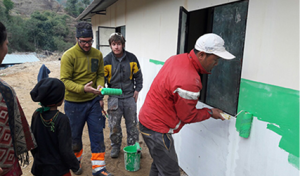
- Promote community participation and volunteerism.
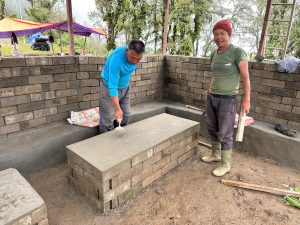
- Demonstrate the effectiveness of affordable interlocking brick technology.
- Recognize and honor the family's long-standing contribution to the Kharikhola community.
Project Location
- Village: Kharikhola
- Rural Municipality: Mahakulung Rural Municipality
- District: Solukhumbu
- Province: Koshi Province
- Country: Nepal
Project Beneficiaries
Primary Beneficiaries
- Mrs. Nabina Rai
- Mr. Ganesh Rai
- Two daughters
- One son
Indirect Beneficiaries
- Local community
- Volunteers
- Future housing projects utilizing the same construction model
Interlocking Brick Technology
The proposed house will be constructed using Interlocking Brick Technology, an innovative building system suitable for Nepal's mountainous terrain and earthquake-prone environment.
Advantages
- Earthquake-resistant design
- Environmentally friendly
- Faster construction
- Lower labor costs
- Reduced cement mortar requirement
- Durable and cost-effective
- Easy future maintenance
Provided that all materials and skilled labor are available, construction is expected to be completed in approximately one week.
Planned House Components
- Three bedrooms
- Living room
- Kitchen
- CGI (Corrugated Galvanized Iron) sheet roofing
- Three windows
- One main entrance door
- Concrete foundation
- Timber roof framing
- Proper ventilation
- Basic electrical wiring
- Essential finishing works
Budget Breakdown
| S.N. | Description | Estimated Cost (NPR) |
|---|---|---|
| 1 | Interlocking Bricks | 250,000 |
| 2 | CGI Roofing Sheets & Roofing Structure | 200,000 |
| 3 | Doors & Windows | 150,000 |
| 4 | Construction Labor & Food Expenses | 150,000 |
| 5 | Transportation | 250,000 |
| 6 | Timber Purchase | 100,000 |
| 7 | Miscellaneous & Contingency | 150,000 |
| Total Estimated Cost | NPR 1,250,000 | |
Implementation Schedule
| Activity | Duration |
|---|---|
| Fundraising & Donor Confirmation | 6 to 12 months |
| Material Procurement | 1 week |
| Transportation | 2–3 days |
| Site Preparation | 2 days |
| House Construction | Approximately 1 week |
| Final Inspection & Handover | 1 day |
Sustainability
The house will be constructed using durable materials requiring minimal maintenance. The beneficiary family will assume responsibility for routine upkeep with continued support and guidance from the local community and the Himalayan Sherpa Family Trust when appropriate.
Monitoring and Transparency
The Himalayan Sherpa Family Trust is committed to ensuring transparency and accountability throughout the project.
Outcomes
What this project is designed to deliver.
Permanent Shelter
A structurally sound home that reduces exposure to weather, instability, earthquakes and unsafe living conditions.
Improved Wellbeing
Better health, rest, privacy, and daily living with reduced financial burden conditions for the whole family.
Community Participation
Increased community engagement through volunteer involvement and local collaboration strengthen shared ownership and accountability.
Replicable Model
A practical example for future humanitarian housing support and projects in remote communities.
"This project is more than a construction initiative. It is an investment in human dignity, compassion, and community solidarity. Together, we can build more than a house. We can build hope."
Support This Project
The housing project depends on donor support, community partnership, and volunteer participation to deliver a safe and dignified permanent home.
Contact the TrustMera Peak Expedition After the Handover
Following the successful completion and official handover of this project, participants will have the opportunity to join an optional expedition to Mera Peak (6,476 m).